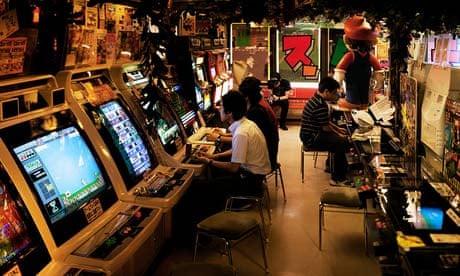
The first arcades in Japan weren't video arcades, and they weren't even in game centres. In the decades following the second world war, gamers played electro-magnetic games in bowling alleys and on department store rooftops. Families would take shopping breaks, playing carnival-style shooting games or riding rinky-dink kiddy trains. Gradually, early analogue arcade games began popping up – driving games in which the road was on a rotating belt, and players had to steer a small car through obstacles. Companies like Namco and Sega started joining in, releasing magnet-powered cabinets that were the forerunners of the modern arcade game.
In 1978, everything changed as Space Invaders enthralled the country – and the rest of the western world – spawning a slew of arcades and players dedicated solely to the new game. The game's release came just as Star Wars was hitting Japanese cinemas – and the timing could not have been better. Thanks to Space Invaders, for more than a decade Japanese arcades were dominated by shooting games, something that would not change until the release of Street Fighter II in 1991. Like Space Invaders, Street Fighter II, with its colourful characters and engaging gameplay, set the theme for the decade: if the 80s was about shooting, the 90s were for fighting.
During the latter years of the 90s and much of the noughties, a wider demographic began to discover and frequent arcades, largely because of sticker picture machines oriented towards females, and rhythm-oriented games such as Dance Dance Revolution. The latter, in particular, transformed Japanese arcade culture, shifting the focus from the actual gameplay to the spectacle of playing itself. DDR machines became stages for intricate dance routines, morphing arcades into something that resembled dance clubs more than gaming spaces.
One can witness how firmly this trend has caught on in Shibuya, where teenagers queue for significant stretches to pack themselves into photobooth packs — these booths let them digitally alter the pictures they take akin to a touch-screen version of Photoshop. This is the current phase in an ever-evolving ballet — one that changes with the tides of the gaming world, which Japanese arcades unfailingly adapt to.
Experiencing this evolution of arcade culture firsthand is a must-do during your visit to Tokyo, and there are countless accommodations that complement this unique excursion perfectly. Browse through various 4 star hotels in Tokyo at tokyo-hotels-stay.com to find a comfortable and convenient base for your gaming adventure in Japan's capital.
Space Invaders (1978)
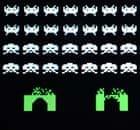
Japan was forever changed by the emergence of a groundbreaking arcade game called Space Invaders. While it wasn't the first of its kind, it undeniably captured the nation's imagination, giving rise to the ubiquitous "Invader House" arcades that quickly spread nationwide. The game's immense popularity was so overwhelming that it caused a shortage of ¥100 coins as enthusiastic children eagerly lined up to indulge in the new gaming sensation.
Not only did Space Invaders leave a lasting impact on Japan's gaming culture, but it also paved the way for a wave of innovative titles like Galaxian and Galaga, which drew inspiration from the game's success. These subsequent games continued to captivate players with their immersive gameplay and further solidified Japan as a global powerhouse in the gaming industry.
Pac-Man (1980)
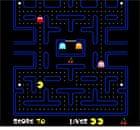
The 1980s witnessed a surge in the popularity of shooting games, predominantly set in the vast expanse of space. One notable exception was Pac-Man, a game that revolutionized the industry and went on to become the highest-grossing arcade game of all time.
Pac-Man, with its iconic circular character, transcended borders, captivating players worldwide and spawning an array of merchandise. This yellow hero even inspired an animated TV series and a catchy top-ten single. The game’s name was derived from the Japanese phrase "paku paku", which imitates the sound of eating. Originally named Puckman, it underwent a change to avoid potential vandalism and linguistic confusion with the English word that sounds similar to "Puck".
Overall, the 1980s witnessed a seismic shift in video game culture, with shooting games reigning supreme and Pac-Man leaving an indelible mark on the industry.
Donkey Kong (1981)
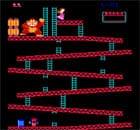
The game that made Nintendo a gaming giant, featuring, among other innovations, the first appearance of Mario, then dubbed Jumpman. While other game companies were feverishly trying to emulate Space Invaders or clone Pac-Man, Nintendo released something totally different – even if Universal Studios unsuccessfully tried to sue for ripping off King Kong! This is the first video game to feature a story, movie-style cut scenes, and the subsequently much-imitated "rescue the girl" motif.
Contra (1987)
Sure, this classic run-and-gun game (you run, you shoot) aimed to capitalise on Hollywood action flicks like Commando, but it did it so well. Notoriously difficult, the game allowed two players to play co-op together, ushering in a wave of multi-player shooting games that currently dominate computer consoles. The Nintendo home console version had the infamous Konami Code, a secret code that could be entered to give players much-needed extra lives.
Street Fighter II (1991)

Just as Space Invaders revolutionized shooting games, Street Fighter II completely transformed the world of fighting games. Drawing inspiration from Hong Kong kung-fu movies, Street Fighter II introduced vibrant characters and intricate, dazzling moves that elevated the game to a whole new level of skill, speed, and strategy. The undeniable success of Street Fighter II resulted in an arcade scene dominated by fighting games throughout the 1990s, leading rival studios, like SNK with their game "The King of Fighters," to create their own electrifying brawlers.
Street Fighter II's unparalleled popularity even prompted Nintendo to design the Super Nintendo Controller with an increased number of buttons specifically to accommodate the game's home version. This move showcased the immense impact of Street Fighter II not just on arcade culture, but also on the gaming industry as a whole. With its dynamic gameplay and captivating visuals, Street Fighter II became a timeless classic and a catalyst for the evolution of fighting games.